Quality control
Quality control built into the order—not added at the end.
From fabric and sample approval to production checks, packaging verification and shipment release, L&L coordinates the checkpoints that keep approved home-textile standards visible throughout the order.
Quality by definition
A reliable inspection starts with a clearly approved standard.
Many shipment problems begin before production: unclear specifications, an unconfirmed color standard, incomplete packaging artwork or a sample that has not been fully approved. We therefore connect quality control to the same commercial workflow used to develop and execute the order.
The exact inspection plan depends on the product, target market, quantity, packaging, testing requirements and buyer instructions. The objective is to compare production against confirmed requirements—not against a vague promise of “strict quality.”
- Clarify what must be approved before bulk production begins.
- Check the product details most likely to affect buyer acceptance.
- Verify packing, labels and shipment information before release.

Three control stages
Checks connected to the real order process.
The following checkpoints cover the transition from an approved product brief to mass production and final shipment. Additional checks can be added when required by the product, customer or target market.

Before production
Lock the product and packaging standard before bulk production.
This stage connects fabric, color, samples, testing and packaging approvals to one executable production reference. Unresolved details should be identified before the order moves into mass production.
- Specification review
- Fabric and color confirmation
- Sample approval
- Compliance and testing confirmation
- Packaging artwork approval
- Pre-production sample approval

During production
Compare production against the approved reference while correction is still practical.
Production checks focus on the physical details that influence product consistency and buyer acceptance. In-process inspection is coordinated when required by the order or when an earlier checkpoint indicates additional follow-up is needed.
- Fabric and color checking
- GSM and size measurement
- Sewing and finishing inspection
- Printing or embroidery comparison
- Packaging material verification
- In-process inspection when required
Before shipment
Verify the finished goods, packing information and release status.
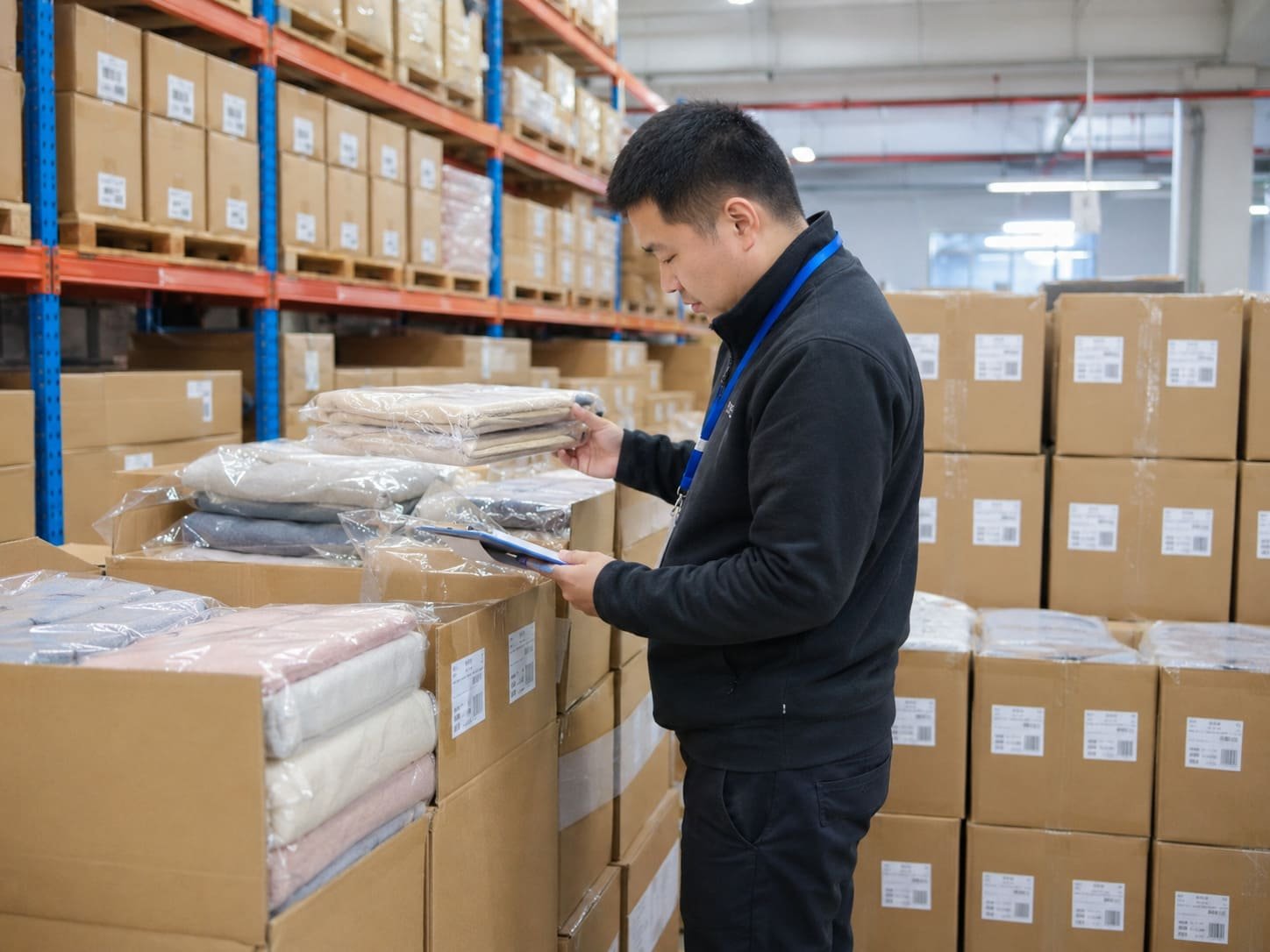
Final checks confirm whether the completed order reflects the approved product and packaging requirements. Shipment approval is based on the agreed inspection scope and the disposition of any identified deviations.
- Quantity verification
- Final appearance and measurement checks
- Packaging and carton-mark verification
- Label and barcode checks
- Licensed-label reconciliation
- Final inspection and shipment approval
Home-textile checkpoints
The details buyers need to remain consistent.
Towels, microfiber cleaning cloths, blankets and mats require different specifications, but the following control areas repeatedly influence product acceptance, retail readiness and repeat-order consistency.
GSM & Dimensions
Weight and dimensions are checked against the confirmed specification and applicable tolerance, because differences can affect hand feel, performance, packing and unit cost.
Fabric & Color
Material, construction, surface appearance and color are compared with the approved reference to reduce variation between sampling and bulk production.
Sewing & Finishing
Seams, edging, hems, binding, loose threads, shape and finishing are reviewed according to the product construction and approved workmanship standard.
Print & Embroidery
Placement, scale, color, orientation and visible execution are compared with the approved artwork application or sample.
Packaging & Barcodes
Retail packaging, labels, inserts, polybags, cartons, carton marks and barcodes are checked against the latest approved files and order instructions.
Licensed Labels
Where licensed labels are supplied in controlled quantities, issued, used, damaged and remaining quantities are recorded and reconciled before shipment.
Deviation handling
Finding a problem is only useful when the next action is clear.
Inspection is not simply a pass-or-fail statement. When a deviation is identified, the relevant goods, standard, cause and corrective action need to be made visible before production or shipment continues.
The exact response depends on the severity of the issue, the production stage, the approved tolerance and the buyer’s instructions.
Record the deviation
Identify the affected specification, sample reference, quantity or production area and document the visible difference.
Separate affected goods when necessary
Prevent unclear or non-conforming items from being mixed with goods awaiting confirmation.
Confirm the corrective action
Coordinate rework, replacement, production adjustment or another agreed disposition according to the issue.
Recheck the result
Verify that the correction addresses the original deviation and has not introduced a new inconsistency.
Confirm release status
Keep the order status clear before the affected production stage or shipment is released.
Licensed product control
Approved artwork and controlled labels require additional traceability.
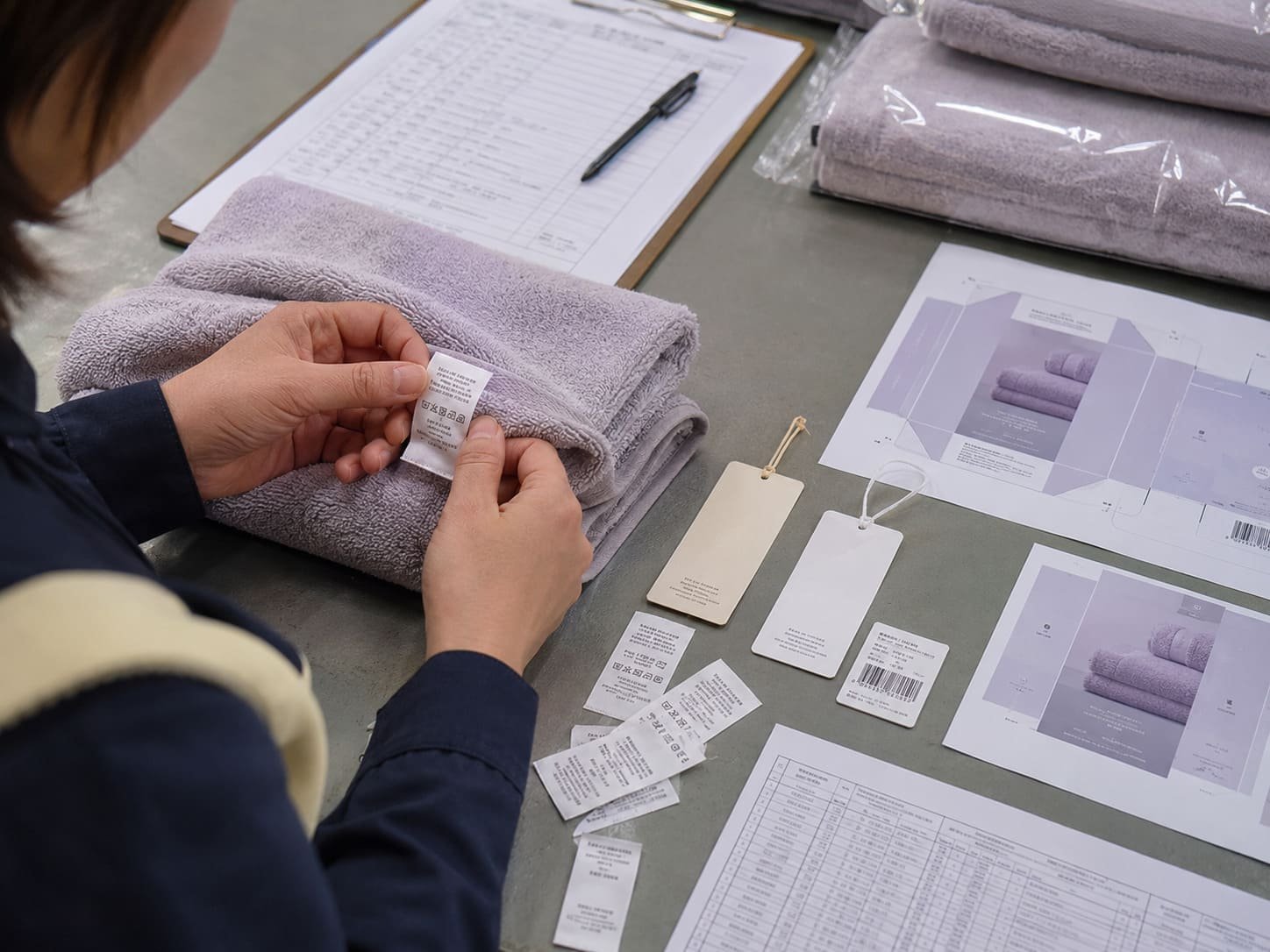
For licensed home-textile programs, L&L works from artwork, usage guidelines and approval comments supplied through the customer or brand process. Product application, color, placement, packaging and production execution are compared with the approved reference.
- Review the latest approved artwork application and product sample.
- Compare print or embroidery placement, scale, orientation and color.
- Verify approved packaging, barcode and label placement requirements.
- Reconcile licensed-label quantities before shipment when labels are quantity-controlled.
Connected commercial workflow
Quality decisions follow the order from selection to shipment.
The highlighted stages are the points where specifications, samples, testing, packaging and finished goods become formal quality references.
Start with a clear standard
Share the product details that must remain controlled.
Tell us the product category, material, size, weight, color, quantity, packaging, target market and required testing or inspection points. We will review the brief and identify the next practical confirmation step.